top of page


Search


When NOT to Use "The" in English
Many English learners struggle with when to use "the"—but knowing when NOT to use it can be just as important. In this lesson, you'll learn common situations where native speakers leave out "the," including meals, sports, countries, languages, and expressions like "go to bed" and "go to church." With clear explanations and practical examples, you'll sound more natural and confident in English.
Jun 23

These English Words Are WRONG (Misnomers Explained)
Misnomers are words or phrases that are misleading or inaccurate. They sound like they describe something correctly, but the meaning is actually different. For students learning English, misnomers can be confusing because they often rely on logic. A learner might try to understand a word by breaking it into parts, but with misnomers, that strategy does not work.
Apr 17
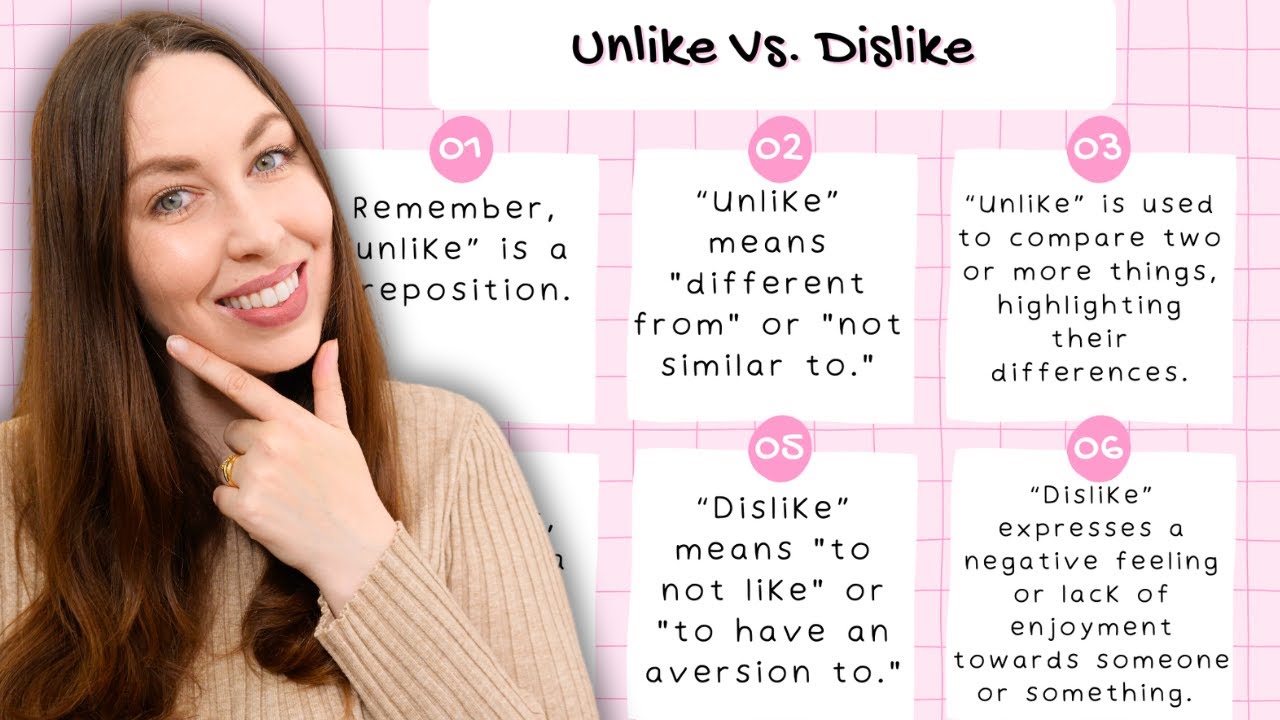
Unlike VS Dislike - Learn the Difference
Unlike VS Dislike? At first glance, these two words look very similar. They both contain the word like, and both have prefixes added to the front. It’s natural to think they might have similar meanings.
But in reality, they are used very differently in English. The confusion mostly comes from the prefixes un- and dis-, which can both suggest “not”, but have slightly different meanings.
Apr 16


10 Common Food-Related Phrasal Verbs Every English Learner Should Know 🍲
This week, I’ve been thinking a lot about how food shows up in our everyday language. As a mom who’s always trying to sneak veggies into dinner and a teacher who loves words, I noticed something fun: many phrasal verbs in English are based on food or animals we eat! These expressions are not about cooking or eating—at least not literally—but they add so much flavor (pun intended!) to how we speak. So, I put together 10 “tasty” food-related phrasal verbs! Let's dig in!
May 1, 2025


6 Ways to Use the Word “Even” in English
The word “even” may look small, but it’s full of personality! In English, “even” can be a number, a way to express fairness, a verb, or even a surprise! Let’s look at 6 common ways to use "even"—with clear examples so you can start using them with confidence.
Apr 11, 2025


Common Verbs Followed by Gerunds and Infinitives
Gerund or Infinitive? Learn when to use gerunds and infinitives! Learn common verbs followed by gerunds and those followed by infinitives.
Apr 10, 2024


Learn 100 Academic English Exam Words
Learn a diverse range of 100 academic English exam words, each accompanied by clear definitions and illustrative example sentences.
Dec 19, 2023


Mastering Causative Verbs - Have, Get, Make, Let, Help
Mastering Causative Verbs - Have, Get, Make, Let, Help. Learn their grammar and get tons of examples! Video lesson available.
Dec 11, 2023


"I think," "I suppose," and "I guess"
Learn the subtle differences between "I think," "I suppose," and "I guess" in English. Remember nuance is important!
Oct 31, 2023


The Abundance of Synonyms in English
Why does English have so many synonyms? Let's learn about the reasons why and the beauty they bring to the English language!
Oct 3, 2023


What Are Antonyms in English and Why Are They Important?
Explore the significance of antonyms in English and their importance in language learning. Discover all in today's insightful lesson.
Sep 8, 2023


"Seek" vs. "Seek For"
Navigating English: 'Seek' or 'Seek for'? Learn why 'seek' stands strong on its own, while 'seek for' takes a back seat in modern language.
Aug 21, 2023


What's the Difference: Forward vs. Foreword
Is it forward or foreword? What is the difference between these two words that sound the same?
Aug 14, 2023


Hear or Here? Common English Mistakes
Hear and here are two commonly confused words in the English language. While they may sound similar, they have very different meanings.
Aug 7, 2023


Lose or Loose? Commonly Confused English Words
Lose and loose are two commonly confused words in the English language. While they may sound similar, they have very different meanings.
Jul 21, 2023
bottom of page